

Commercial Hardwood
Real oak, hickory, and maple for spaces that want genuine wood and can give it the upkeep it needs.
Learn moreA convincing wood look with a hard, scratch-resistant surface, at a lower cost than hardwood. The catch is moisture, and knowing that up front is half of choosing it well.
Every box of laminate carries an AC rating, and it is the number that matters most for a commercial floor. AC stands for abrasion class, set out in the EN 13329 standard, and it runs from AC1 up to AC5 in the products you will actually see. AC3 is the heavy residential and light commercial grade. AC4 is the general commercial rating, the floor for an ordinary office or shop. AC5 is built for heavy commercial traffic, the grade I would put in a busy entrance or a main corridor.
Here is the part the marketing skips. The AC rating measures how long the top surface resists wear, and that is all it measures. It says nothing about how the floor handles a dropped weight, a dragged chair, or water. Most laminate also carries a separate use class, numbered for the type and intensity of the room, and that is the figure written to answer the question of whether a board belongs in your space. Match the use class to the room first, then check that the AC rating backs it up.

Cut a laminate plank in half and you find the whole story. The top is a printed photograph of wood under a hard melamine wear layer, and that surface is genuinely tough, harder against scratches than a vinyl floor. Under it sits the core, and the core is high-density fiberboard, which is wood fiber pressed hard with resin. Wood fiber is the catch. When water finds a seam and sits on the exposed edge, the core drinks it up and the plank swells and peaks at the joint.
The surface will shed a spill you wipe up in a minute. What kills a laminate floor is standing water at a seam, the slow drip behind a break-room sink or the puddle tracked in through an entry in February. That single fact decides where laminate belongs. Keep it in dry rooms and it will outlast its warranty. Put it where it gets wet and you will be replacing boards.
Most commercial laminate runs somewhere between seven and twelve millimeters thick, and thickness is not the same as toughness. A thick board with a thin wear layer still scuffs, so read the AC rating, not the millimeters. The thickness mostly changes how solid the floor feels and how much it quiets the hollow click underfoot. One more line to check on the box is the emission class. Because the core is wood bonded with resin, laminate carries a formaldehyde rating, and E1 is the standard low-emission class you want to see for an occupied commercial room.
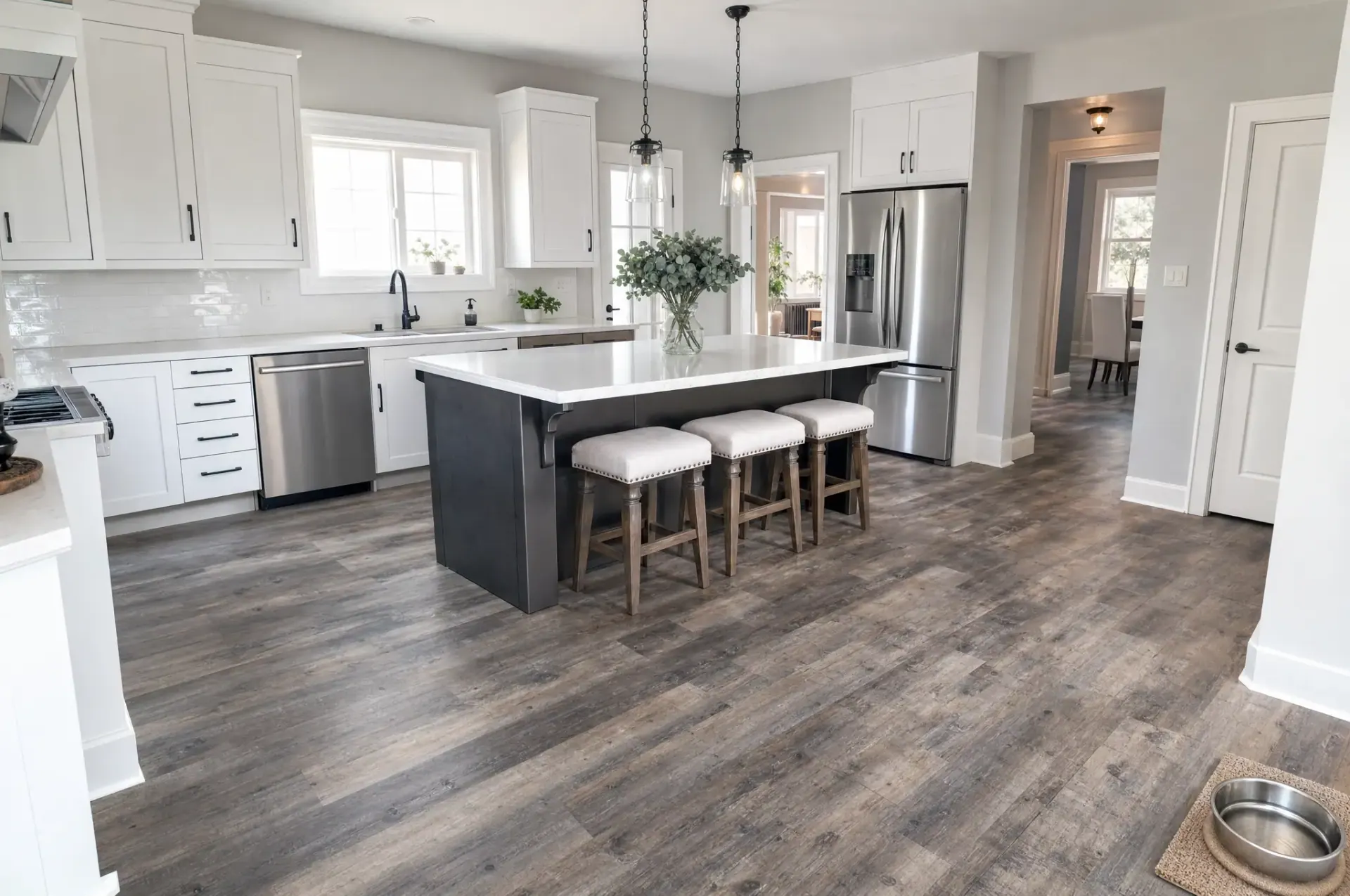
Commercial laminate goes down as a click-lock floating floor. The planks lock to one another and rest on an underlayment rather than gluing to the subfloor, which makes for a quick install and an easy future repair. Two things make or break it. The boards have to acclimate to the room for a day or two before they go down, so they have already done their expanding and contracting, and the install has to leave an expansion gap around the perimeter so the floor can move without buckling. A good underlayment adds a little cushion, quiets the hollow click underfoot, and bridges small flaws in the subfloor.
Laminate fits offices, boutiques, showrooms, and dry retail floors, the kind of rooms that want a wood look on a sensible budget and stay dry. In those spaces its hard surface takes chair casters and foot traffic better than vinyl does. The moment moisture enters the picture, a break room with a sink, a clinic, an entry that catches the weather, I would move you to luxury vinyl plank instead. LVP has a plastic core that does not swell, so it takes the wet rooms laminate cannot. The two products look similar on the rack and behave very differently once water is involved, and picking between them is mostly a question of how dry the room stays.
Bring your floor plan to the store in Canal Fulton, or call (330) 666-7273, and we will help you weigh laminate against hardwood and vinyl for the way your space is used.
Laminate is one of several wood-look options we sell and install. Compare it with these to find the right fit for your space.
Real oak, hickory, and maple for spaces that want genuine wood and can give it the upkeep it needs.
Learn more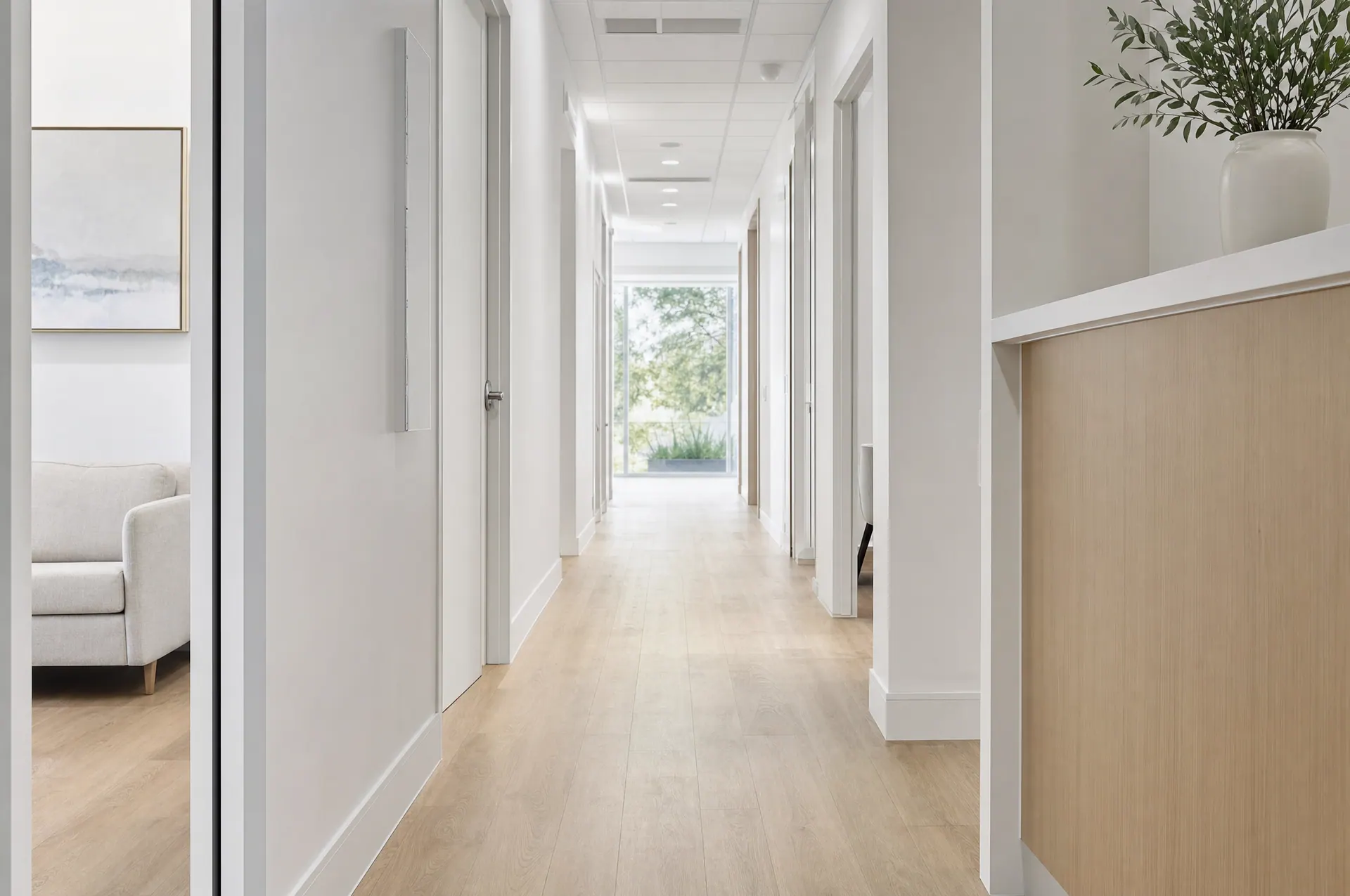
Waterproof luxury vinyl plank for the wet and high-traffic rooms where a fiberboard core struggles.
Learn more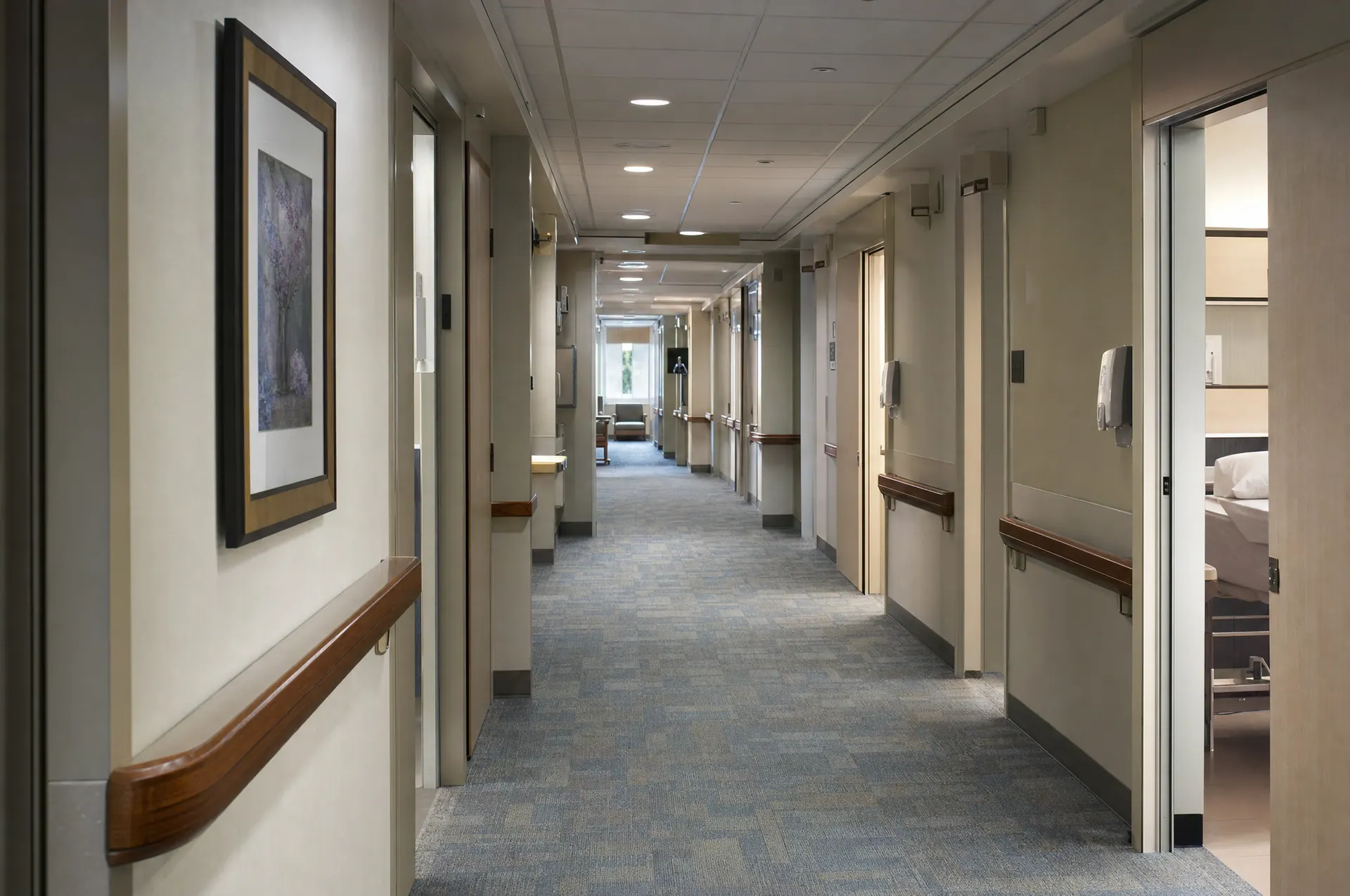
Broadloom and modular carpet tile for offices and classrooms where acoustics and comfort come first.
Learn more