
Commercial Laminate
A wood look at a lower entry point, with a hard surface that shrugs off scratches in offices and dry retail.
Learn moreReal wood brings a warmth no printed floor matches. The trick in a commercial space is matching the species, the finish, and the construction to how the room actually gets used.
The first question with a commercial wood floor is which species, and the useful number there is Janka hardness, a measure of how much force a wood takes before it dents. White oak comes in around 1360, hard maple around 1450, and hickory up near 1820. White oak is the industry standard for a reason. It is hard enough for steady traffic, its open grain hides the inevitable scuffs, and it takes stain evenly. Hickory is the elite performer for the busiest corridors and entries, though its bold grain reads rustic, which suits some rooms and fights others.
Maple is tight-grained and clean-looking, which is why you find it in retail and on campuses, but that smooth surface shows every mark a busy floor collects, so it wants a space that gets looked after. Walnut, around 1010 on the scale, is softer than the rest. It is a beautiful floor for an executive suite or a low-traffic feature area, and the wrong floor for a lobby. How a board is sawn matters as much as the species. Rift and quartered cuts stand the grain up vertically, which is the steadiest option for a commercial footprint and the one least likely to gap.
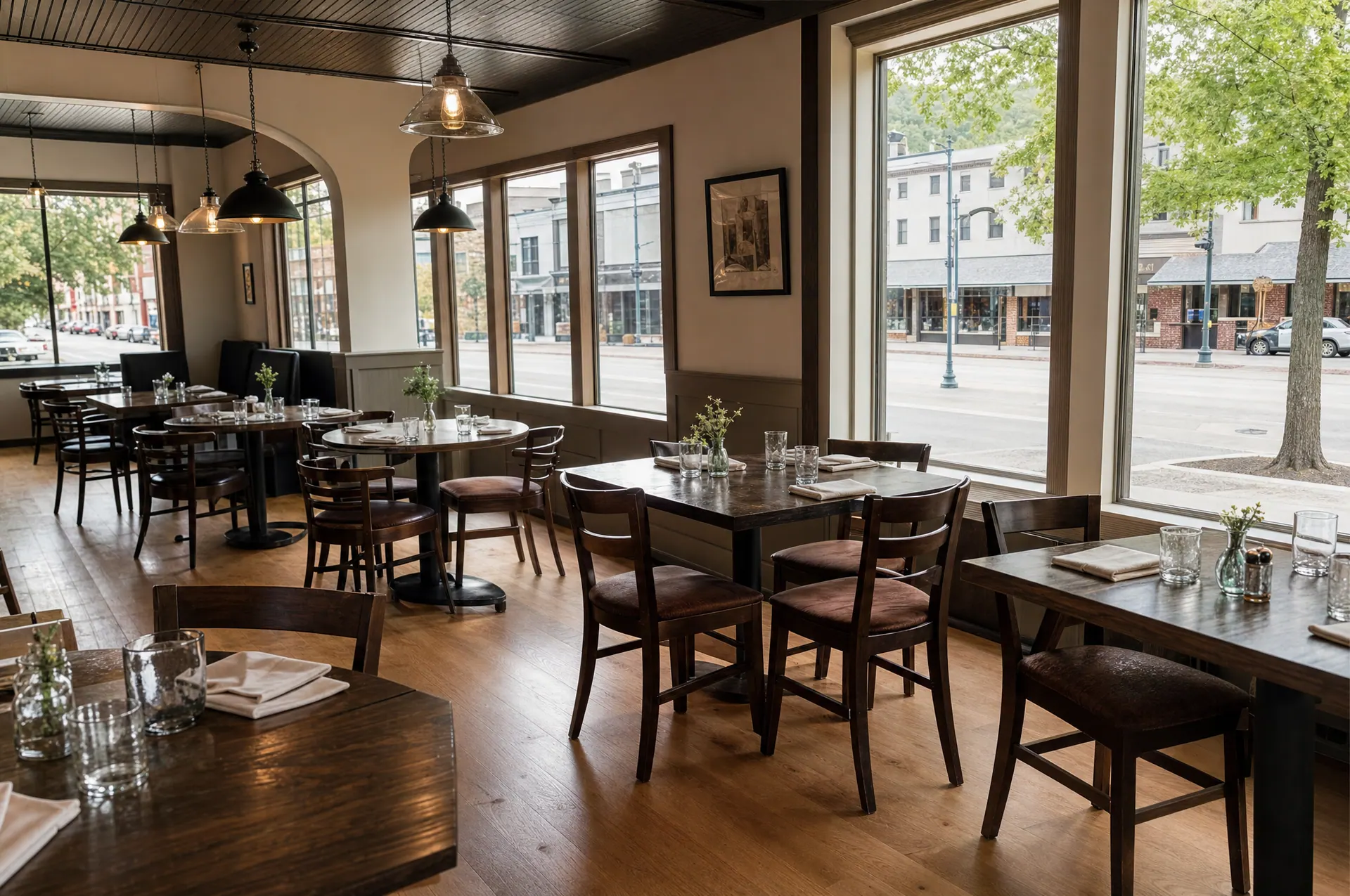
There are two ways to put a finish on a wood floor, and for a business the difference is mostly about your calendar. Prefinished boards show up with the stain and finish already applied and cured at the factory, commonly a UV-cured coating reinforced with aluminum oxide. That coating is usually harder than anything we can build on site, and the floor is ready to walk on the day it goes down. The cost is a small bevel at every board edge, a groove that collects crumbs and holds mop water.
Site-finished floors go down bare, then get sanded flat and coated in place, which gives one continuous surface with the joints sealed and no bevel. The cost there is time and disruption: the space closes for sanding, and the finish, whether an oil-modified or a water-based commercial polyurethane, needs dry time between coats before anyone can use the room. For a restaurant trying to reopen on a Monday, prefinished is almost always the right call. For a lobby that wants a flat, uninterrupted floor and can give up the room for a week, site-finishing earns the downtime.
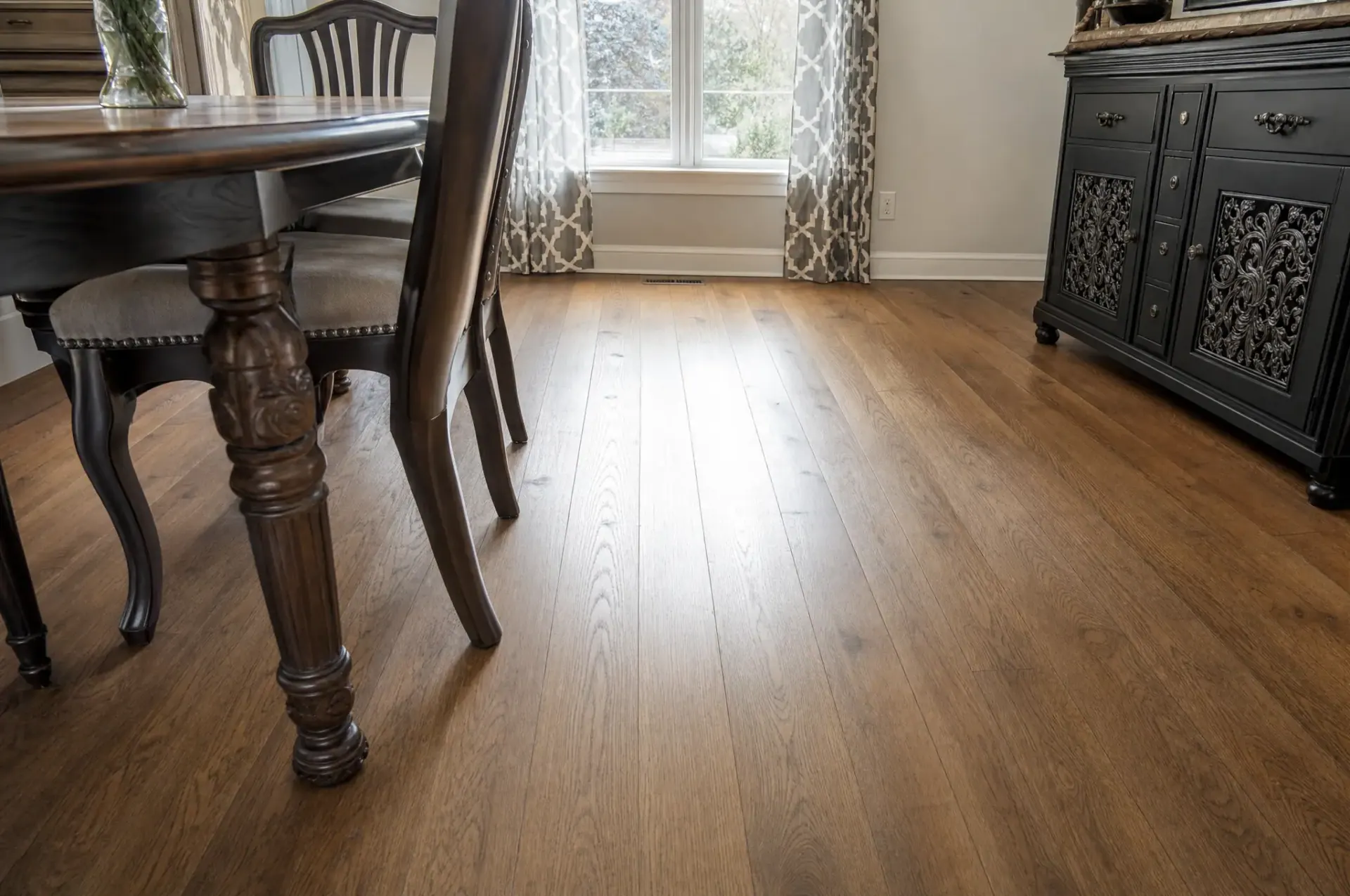
Which construction you can use depends on what is under the floor. Solid planks want to be nailed to a wood subfloor. Over a concrete slab, especially on grade or below it, engineered wood is the safer bet, because its layered core stays put against the moisture and movement a slab brings. We take a moisture reading before we recommend either one.
Ohio gives wood a workout through the year. Boards take on moisture in a humid July and give it back in a dry, heated January, so a commercial floor will open thin gaps in winter and close them again by summer. That is normal wood behavior, not a defect. Acclimating the material to the building before installation and holding indoor humidity reasonably steady both keep it in check. Maintenance is the real advantage of wood over most hard floors: when the finish dulls, a screen-and-recoat refreshes the surface without a full sanding, and a solid or thick-wearlayer engineered floor can be sanded back and refinished years down the road rather than torn out.
Where I would talk you out of wood is the wet and heavy-rolling parts of a building. Restrooms, slushy winter entries, kitchens, and anything with constant cart traffic are rough on a wood floor, and tile or a commercial resilient product will serve you better there. Save the wood for the dining room, the office, or the retail floor where it does what nothing else can.
Come see samples at the store in Canal Fulton, or call (330) 666-7273 and we will talk through species, finish, and whether wood is the right floor for the room.
Hardwood is one of several options we sell and install. Compare it with these to find the right fit for your space.
A wood look at a lower entry point, with a hard surface that shrugs off scratches in offices and dry retail.
Learn more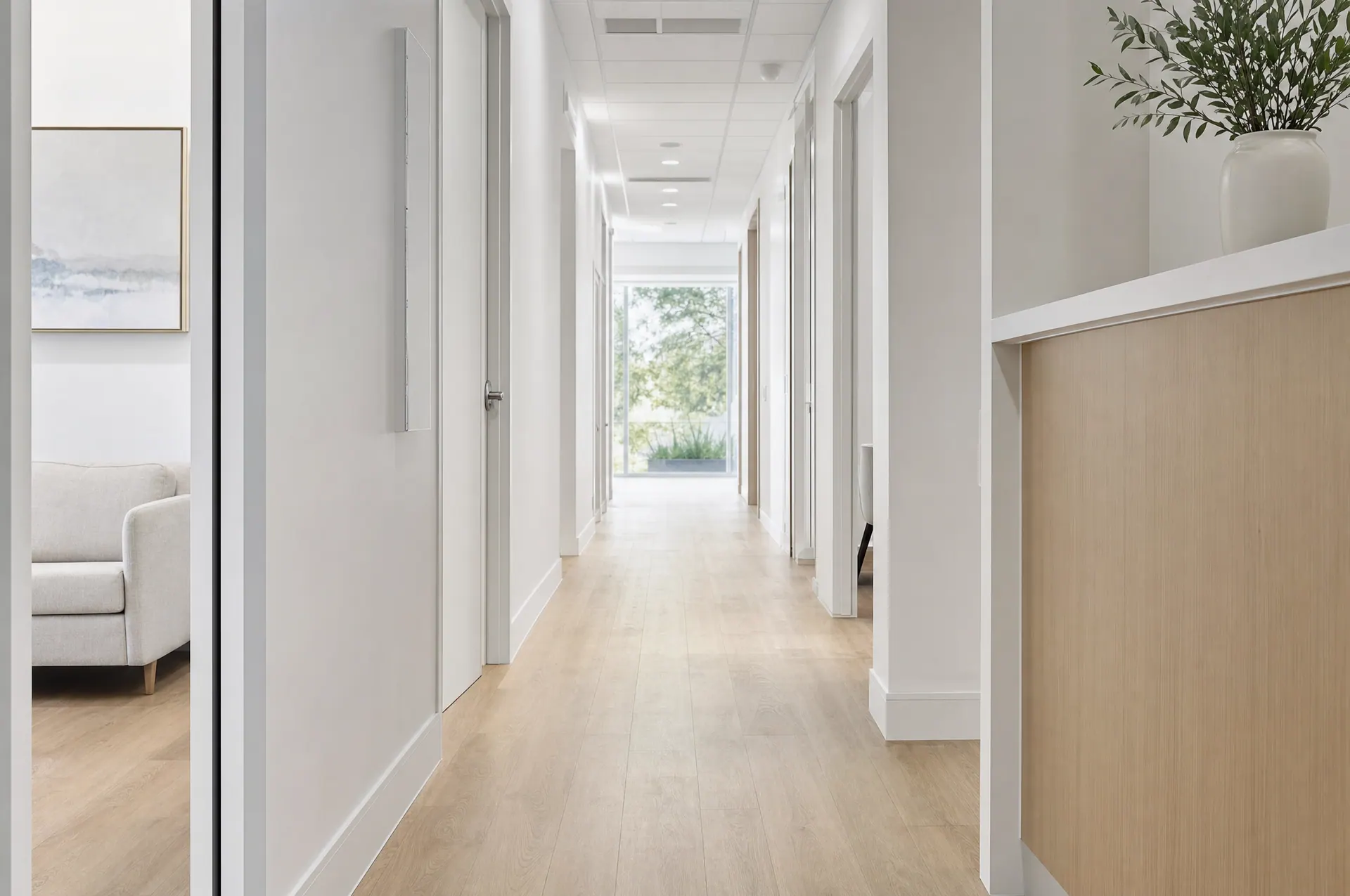
Waterproof luxury vinyl plank that takes the wet and high-traffic rooms where real wood struggles.
Learn more
Porcelain and ceramic tile for restrooms, entries, and other wet areas that are hard on wood.
Learn more