
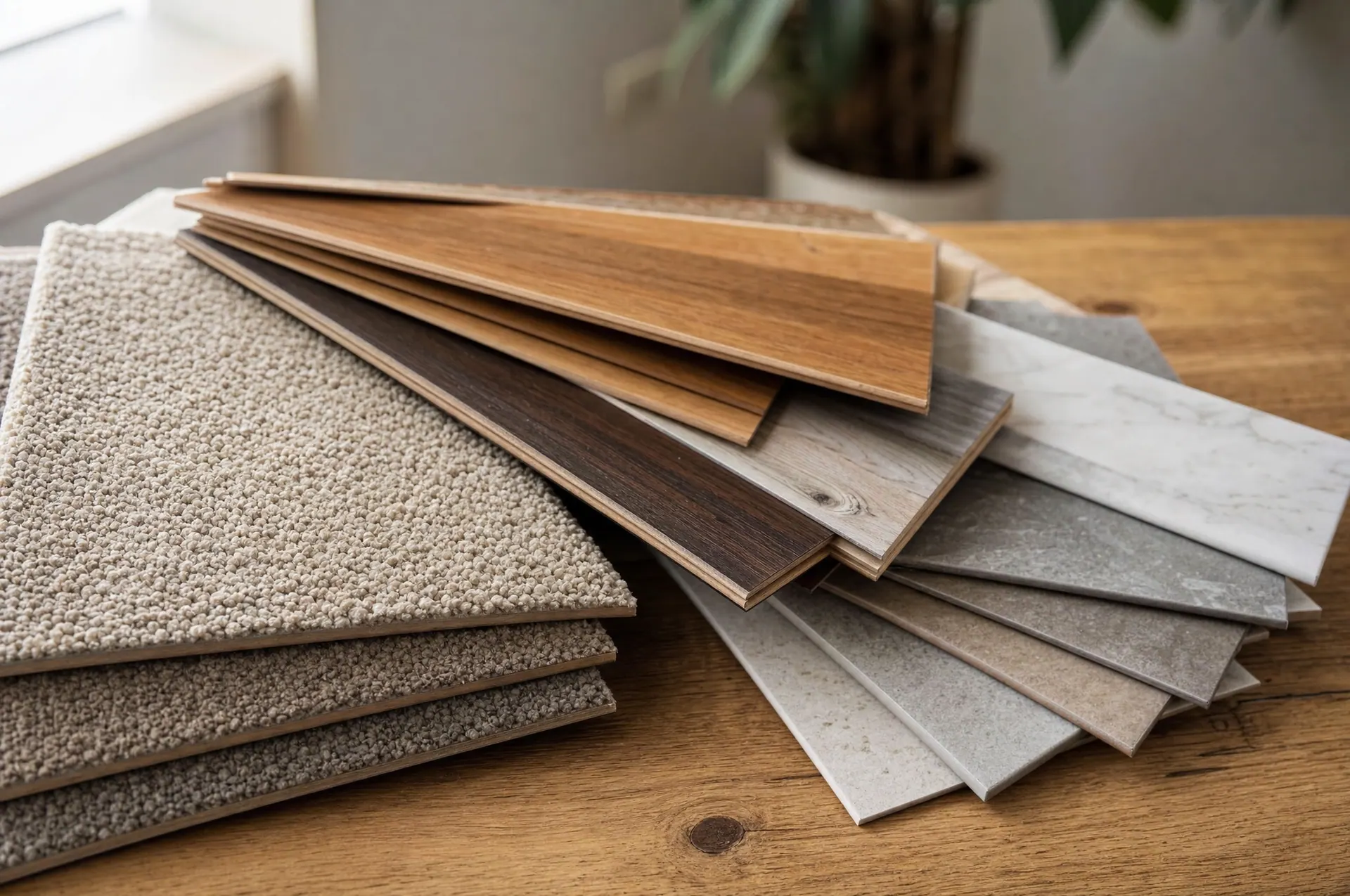
Your Floors Will Outlast Your Furniture, So Choose Them Like It
People swap out sofas and paint colors far more often than they replace flooring. A floor you put down today is likely to follow you through multiple couches and life stages, so it is worth getting the decision right.
Figuring out how to choose flooring starts with one question many homeowners skip: what does this room actually demand? Not what looks good online, but what can survive a dog's claws, a toddler's juice cup, and Ohio's freeze-thaw winters. This guide works through that question room by room.
Kitchen Flooring
When choosing flooring for a kitchen, prioritize waterproof performance and scratch resistance. Luxury vinyl plank with an SPC core or porcelain tile handles spills, dropped cookware, and heavy foot traffic well.
Top Recommendations
Kitchens take more punishment than any other room: sink spills, grease near the stove, the dog's water bowl, grocery bags dragged across the floor.
Luxury vinyl plank with a stone polymer composite (SPC) core is a common kitchen choice. Look for a waterproof core and a thicker wear layer. The wear layer is the clear top coating that protects against scratches, measured in mils, and a thicker one is a good idea in kitchens with pets or kids.
Porcelain tile is the other standout. Dense, low-absorption porcelain is functionally waterproof, and large-format tiles reduce grout lines, which means less scrubbing. A matte or textured finish adds slip resistance.
Waterproof laminate gives you a wood look at a lower price point. Just confirm it is truly waterproof, not only water-resistant. Older laminate without a sealed core will swell at the seams.
What to Skip
Solid hardwood in a kitchen is a gamble. Claws, water, and humidity swings create gaps and cupping. Standard ceramic tile chips more easily than porcelain. And carpet does not belong in a kitchen.
Living Room Flooring
The living room balances looks with everyday durability. Hardwood, engineered hardwood, and premium LVP all deliver the warmth and resilience living spaces need.
Best Options
Hardwood flooring remains a benchmark. If you choose solid hardwood, check the Janka hardness rating, which measures dent resistance. White oak and red oak are popular, durable choices; very soft species dent easily unless you want a rustic, lived-in look.
Engineered hardwood bonds a real-wood surface to a cross-layered plywood core. That construction resists warping from seasonal humidity swings better than solid wood. A thicker wear-layer veneer gives you more refinishing options down the road.
LVP with an SPC core and realistic embossed-in-register (EIR) textures has gotten remarkably close to real wood at a lower cost. A thicker wear layer handles families with dogs, kids, and heavy foot traffic.
For a cozy living room, a frieze or textured carpet with a quality pad is hard to beat. Frieze's twisted fibers hide footprints and vacuum marks better than plush, and modern stain-resistant fibers hold up well to everyday life.
What to Avoid
High-gloss hardwood finishes show every scratch, so choose matte or satin. Thin, cheap laminate sounds hollow underfoot, and bargain LVP with a very thin wear layer will scratch through in a couple of years.
Bedroom Flooring
Bedrooms are the one room where comfort can win over durability. It comes down to what feels best when your feet hit the floor in the morning. Carpet, hardwood with area rugs, or LVP all work.
Carpet is still the most popular bedroom choice because it is warm, quiet, and cushioned. A cut-pile textured plush hits a sweet spot between comfort and durability. If allergies are a concern, modern fibers paired with good vacuuming trap allergens reasonably well.
Hardwood or engineered hardwood with a washable area rug gives bedrooms a cleaner, more modern look. Pair it with quality underlayment to reduce noise.
LVP works too, especially in kids' bedrooms where spills happen. It cleans up more easily than carpet and holds up to roughhousing.
Skip tile in bedrooms. It is cold, hard, and loud, which is not what you want in a room built for rest.
Want to compare these materials in person? Call Carroll's Carpet & Flooring at (330) 666-7273 or visit 2381 Locust St., Canal Fulton, OH 44614, and feel the difference between SPC vinyl, engineered hardwood, and plush carpet underfoot. Or schedule a free in-home estimate and we will bring samples to you.
Bathroom Flooring
Bathroom flooring is simple: if it is not waterproof, it does not belong. SPC luxury vinyl plank and porcelain tile are the two options we recommend. Both handle standing water, humidity, and daily splashes.
LVP with an SPC or WPC core is a popular bathroom choice. SPC is denser and more dent-resistant; WPC is slightly softer and quieter underfoot. Both are waterproof. Make sure your installer seals perimeter edges, because water can get under a floating floor if transitions are not done correctly.
Porcelain tile is the traditional choice. It resists water absorption and works well with radiant heat. Large-format porcelain reduces grout maintenance. Choose textured or matte finishes for wet areas, since polished porcelain near a shower is a slip hazard.
What Never Belongs in a Bathroom
"Water-resistant" and "waterproof" are not the same thing. Water-resistant laminate handles a splash, not standing water next to a tub. Hardwood, solid or engineered, does not belong in a bathroom; it warps. Peel-and-stick vinyl tiles tend to lift at the edges in humid bathrooms, which can lead to mold underneath.
Basement Flooring
Ohio basements and moisture go hand in hand. Below grade, waterproof construction and dimensional stability are non-negotiable, and SPC luxury vinyl plank is a clear winner.
Why SPC Vinyl Works Below Grade
Below-grade flooring must handle moisture from underneath, not just on top. SPC vinyl plank installs directly over concrete with a moisture barrier. It is waterproof, dimensionally stable through temperature swings, and many products include attached underlayment for comfort and warmth.
Modular carpet tiles are a smart alternative for basement family rooms. If a section gets wet, you replace individual tiles rather than the whole floor. Porcelain tile works well in basement laundry and utility areas.
Before anything goes down, concrete moisture levels should be tested. If readings are elevated, a moisture mitigation system goes in first. Skipping subfloor prep is the most expensive mistake basement flooring projects make.
What to Avoid Below Grade
Solid hardwood in a basement will fail. Even engineered hardwood is risky without verified moisture control. Standard laminate swells and buckles, and carpet glued directly to concrete without a barrier can grow mold.
Entryway and Mudroom
Entryways have to plan for the worst: road salt, snowmelt, mud, gravel, and soaking-wet boots for months at a time. Porcelain tile with a textured finish or SPC vinyl plank are the two options that consistently survive Ohio winters.
Porcelain tile with a slip-resistant texture is a strong first pick. It will not stain from deicers and handles grit without scratching. LVP with a thicker wear layer is the warmer alternative and will not feel like ice when you are pulling off boots.
Skip hardwood, since constant grit destroys the finish; carpet, which becomes a dirt trap; and standard laminate, whose seams fail from tracked-in moisture.
Laundry Room
Treat a laundry room like a bathroom, because water is inevitable. Washing machines leak, hoses burst, and wet clothes drip.
SPC vinyl plank is the practical choice: waterproof, comfortable for standing while folding, and affordable. Porcelain tile is the premium option that handles heavy appliance weight and dryer heat. Avoid carpet, hardwood, standard laminate, and peel-and-stick vinyl, which heavy appliances tend to shift over time.
Flooring Comparison by Room
How each material generally performs room by room:
| Room | LVP/SPC | Solid Hardwood | Engineered Hardwood | Laminate | Carpet | Porcelain Tile |
|---|---|---|---|---|---|---|
| Kitchen | Excellent | Poor | Fair | Good | No | Excellent |
| Living Room | Excellent | Excellent | Excellent | Good | Good | Fair |
| Bedrooms | Good | Good | Good | Good | Excellent | Poor |
| Bathrooms | Excellent | No | No | Poor | No | Excellent |
| Basement | Excellent | No | Poor | Poor | Fair* | Good |
| Entryway | Excellent | Poor | Poor | Fair | No | Excellent |
| Laundry | Excellent | No | No | Poor | No | Excellent |
*Carpet tile only, with moisture barrier
What Affects Your Cost
The sticker price on a box of flooring is only part of the story. A few factors shape what a project actually costs:
- Material grade. Entry-level, mid-range, and premium products vary widely in wear layer, texture, and construction.
- Room size and layout. Larger rooms and complex layouts take more material and labor.
- Subfloor prep. Leveling, patching, and moisture mitigation add to the scope when they are needed.
- Old-floor removal. Tearing out and hauling away the existing floor is its own line of work.
- Install complexity. Patterns, diagonal layouts, and tight fits take longer.
- Stairs and transitions. Stair treads, nosings, and transitions between rooms add labor and trim pieces.
A cheaper floor that fails early can cost more over its life than a sturdier floor that lasts, so it is worth thinking in terms of cost per year rather than price per box. For a firm, itemized number on your project, get a free estimate.
Ohio Weather Factors
National flooring guides tend to ignore regional climate. Here is what matters for choosing flooring that survives Ohio's weather.
Humidity Swings
Indoor humidity ranges from quite dry in a heated winter home to high in a summer basement. Solid hardwood expands and contracts through that range, creating gaps in winter and cupping in summer. Engineered hardwood's cross-layered core and SPC vinyl's rigid construction handle these fluctuations with far less visible movement.
Basement Moisture
Many older Ohio homes have some level of basement moisture. Before any installation, concrete moisture levels should be tested. If readings exceed the manufacturer's thresholds, a moisture mitigation system goes in first. Skipping this step is how people end up needing a tear-out later.
Salt, Snow, and Seasonal Abuse
Through the winter, every entrance collects road salt, sand, and snowmelt. Porcelain tile and SPC vinyl resist these without staining or warping, while hardwood and standard laminate do not. Waterproof entryway flooring is a good idea regardless of what is in the rest of the house.
Subfloor Conditions
Ohio homes range from 1800s farmhouses with uneven wood subfloors to mid-century homes with aging concrete to new construction. Every subfloor is different and should be assessed before choosing a product. Proper subfloor prep is what separates a floor that lasts decades from one that fails in a few years.
Maintenance by Flooring Type
Be honest about how much time you will spend on upkeep. It matters.
LVP/SPC Vinyl: Sweep and damp mop. No waxing, refinishing, or resealing. The easiest floor to maintain.
Solid Hardwood: Sweep or dust mop regularly in high-traffic areas. Clean with hardwood-specific cleaners, not vinegar or steam mops. Plan to refinish periodically, and keep indoor humidity in a moderate range.
Engineered Hardwood: Same daily care as solid hardwood, but most products can only be refinished once or twice because of the thinner veneer.
Laminate: Sweep and damp mop, and avoid excess water. It cannot be refinished; when the wear layer goes, the floor goes.
Carpet: Vacuum regularly, treat stains immediately, and plan on professional hot-water extraction cleaning periodically.
Porcelain Tile: Sweep and mop, and reseal grout as needed. The tile is nearly indestructible; grout is the maintenance item.
FAQ
What's the single best flooring for an entire house?
If you had to pick one product for a whole home, SPC luxury vinyl plank with a thicker wear layer is a strong candidate. It works in every room, including bathrooms and basements, handles pets and kids, and modern options look close to real wood. That said, mixing materials by room gives you better performance in each space.
Is hardwood flooring worth the extra cost?
In the right rooms, yes. Hardwood is widely valued by buyers and can last a very long time with periodic refinishing. But it does not belong in bathrooms, basements, kitchens, or entryways. Hardwood suits living rooms, dining rooms, and bedrooms best.
How do I choose flooring that works with pets?
Look for scratch resistance and waterproof construction. SPC vinyl with a thicker wear layer resists claw marks better than hardwood. If you want hardwood, choose a harder species by Janka rating and avoid soft woods and high-gloss finishes. For carpet, stain-resistant fibers help with accidents.
What flooring is best for Ohio basements?
SPC luxury vinyl plank. It is waterproof, dimensionally stable, and installs over concrete with a moisture barrier. Carpet tile with a moisture barrier is a secondary option for comfort-focused spaces.
Can I install new flooring over my existing floor?
Often, yes. LVP, laminate, and engineered hardwood can float over existing hard surfaces that are flat, clean, and structurally sound. Old carpet should come up first, and existing vinyl in poor condition should be removed. The answer depends on your subfloor condition and the new product's requirements, which we assess during an in-home consultation.
How long does professional flooring installation take?
It depends on the product, the subfloor condition, and the number of transitions. A single room is often quick, while a whole home takes longer. Tile generally takes longer than vinyl, and basements and bathrooms often need extra time for moisture prep. We will give you a clear timeline before any work begins.
Should I choose flooring based on resale value or personal preference?
Both. Hardwood and LVP are generally well regarded by buyers, but you are the one living on these floors daily. If you love plush carpet in bedrooms, install it there; bedroom flooring rarely makes or breaks a sale. Save the hardwood and LVP for common areas where they affect buyer perception most.
Choose Flooring You'll Still Love in 10 Years
The best approach is room by room, matching materials to each space's real demands. Do not pick on looks alone, and do not pick on price alone. Pick based on what the room needs, what your household throws at it, and what you are willing to maintain.
We have helped Ohio homeowners make this decision since 1946, and we are happy to help you too.
Carroll's Carpet & Flooring | 2381 Locust St., Canal Fulton, OH 44614 | (330) 666-7273
Browse our project gallery, explore our residential flooring and commercial flooring options, or request your free in-home estimate today.